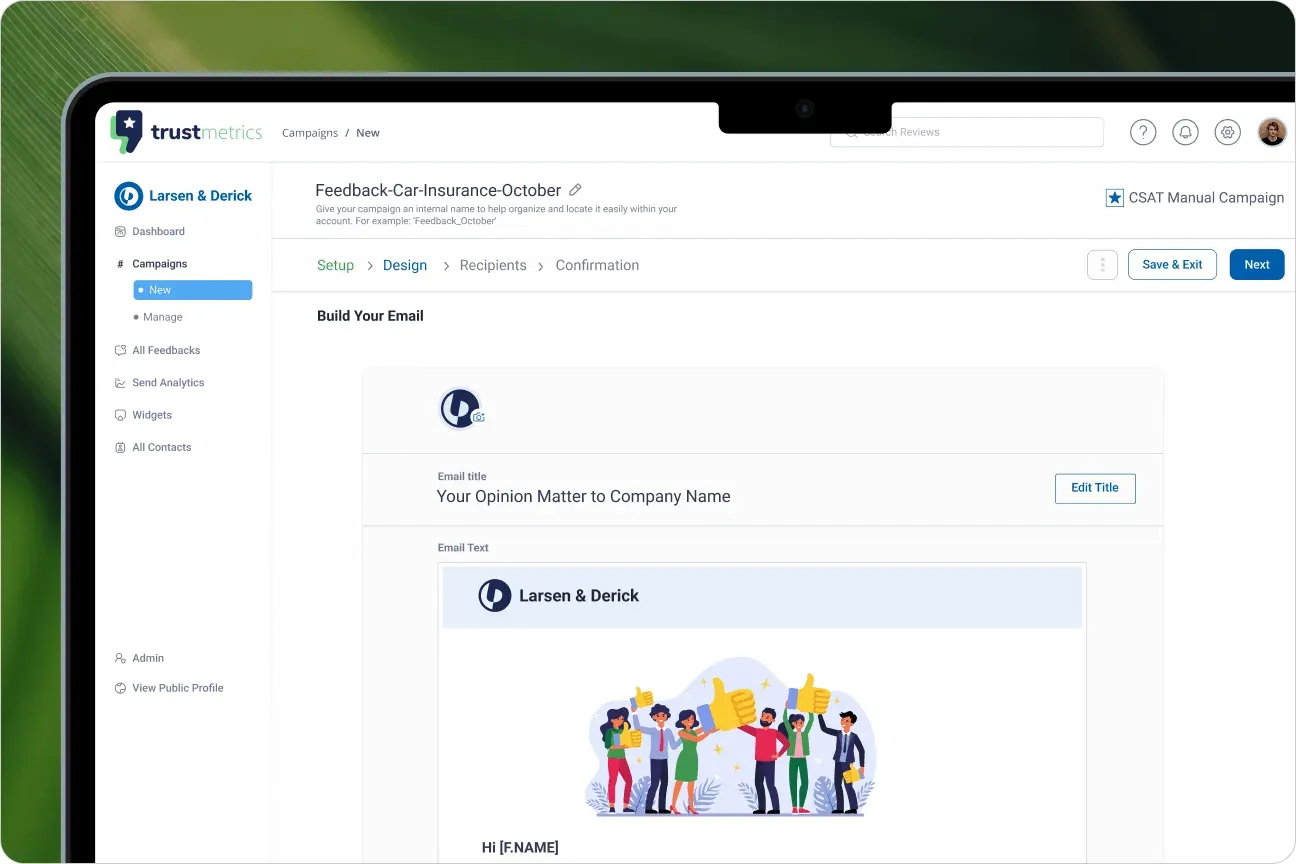
Turning abstract trust data into a score people actually believe.
- Project name
- Trustmetrics business reviews
- My role
- End-to-end product design
- Industry
- B2B
Product Overview
Trustmetrics helps businesses collect and understand customer feedback. Teams run CSAT and NPS campaigns, read the results as clear scores with their scale and response counts, and publish ratings widgets on their own sites. The goal was for the product to feel as trustworthy as the data it reports on.
The Problem
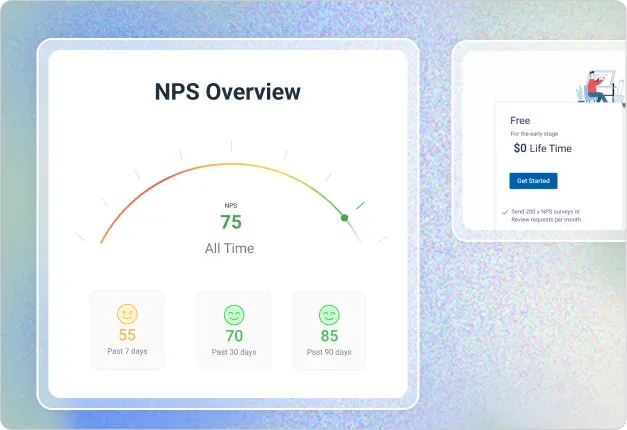
Businesses find out about unhappy customers too late, often after a bad review is already public. Reviews are scattered across Google and other sites, and CSAT and NPS surveys are sent through generic tools, so nothing connects the two or leads to follow-up.
Key insights and user frustrations
- 1 There isn’t a unified solution that brings all CSAT/NPS reviews under one roof.
- 2 Businesses can’t easily tell whether customer sentiment is good, neutral or bad, even though it directly affects company growth.
- 3 A multi-location business finds it difficult to get branch specific reputation data.
Challenge
How might we bring all customer feedback into one place, so businesses can catch and resolve negative feedback early and send on-brand CSAT and NPS campaigns in minutes?
“I don’t know who should reply, or whether someone already did.” They need assignment and status, so nothing gets answered twice or missed.
“Building personalized emails takes too long.”
Decisions & Iteration
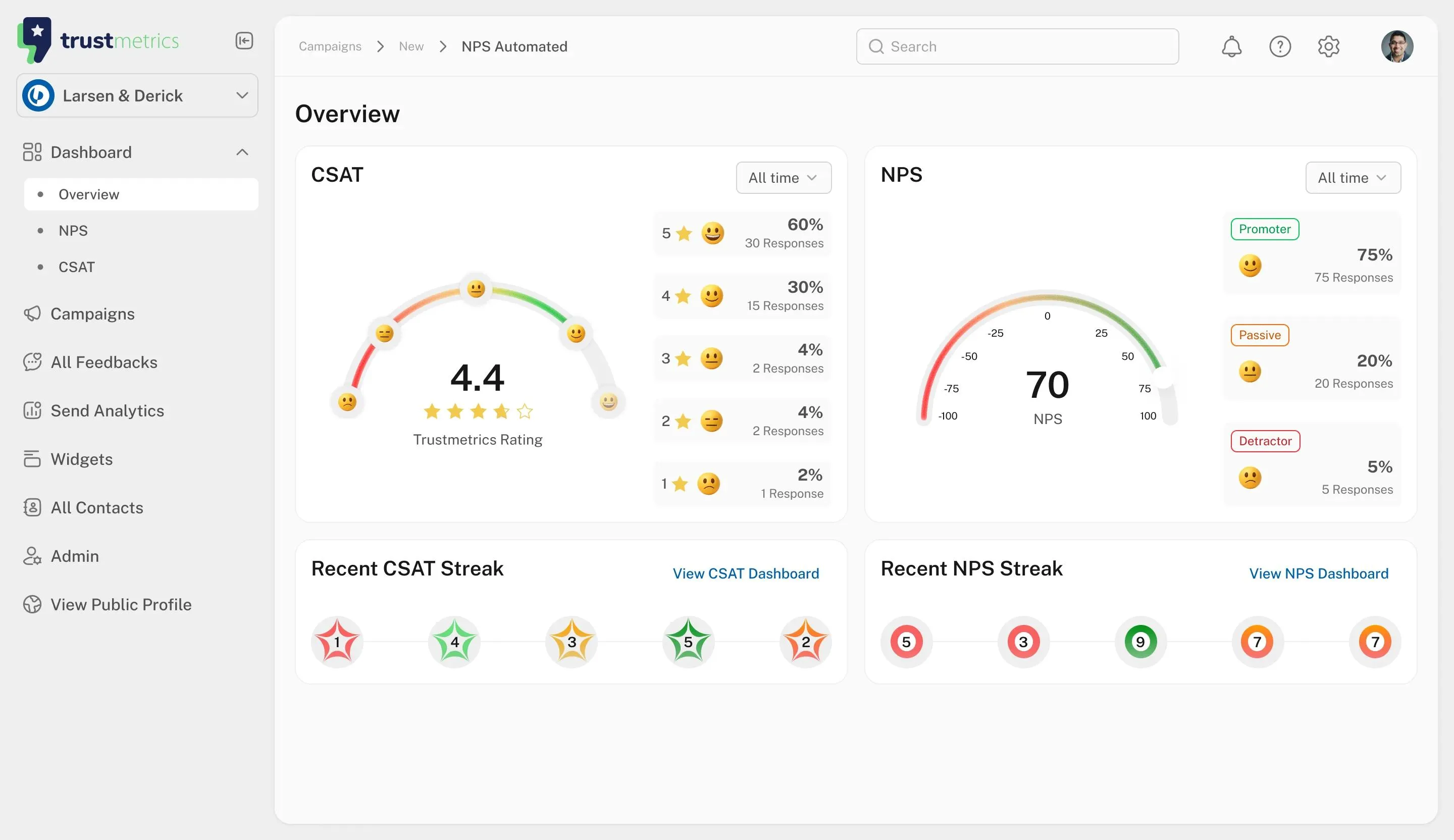
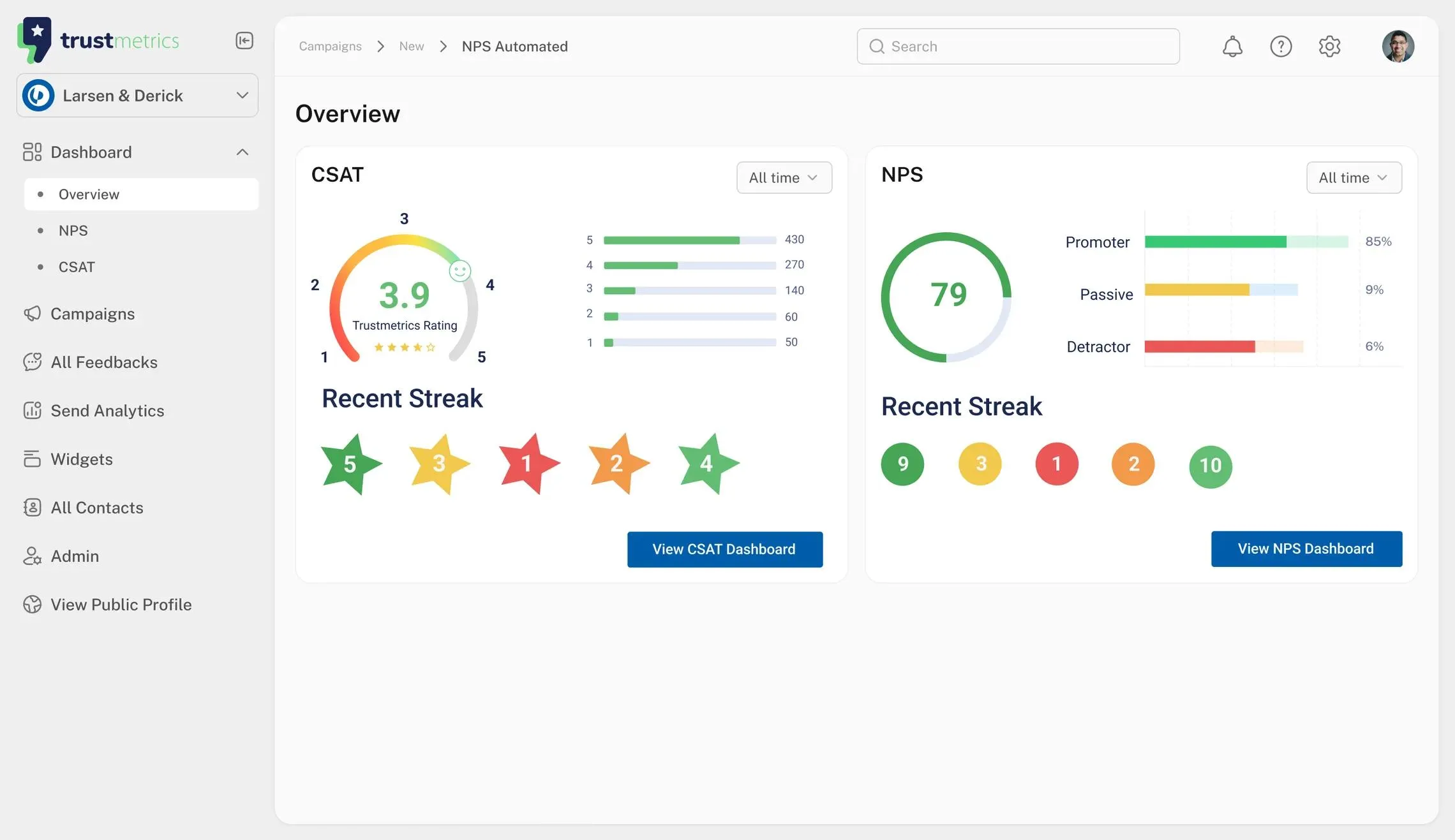
Rating overview/NPS
At a glance
Short on time? This is the problem and the result for each point, without using the slider. Problem and result for each point.
- 1
Counts hide the proportion
Problem
Managers do the math to tell a 5% problem from a 25% one.
Final: Proportion reads at a glance
Each row pairs a percentage with its response count.
- 2
Segments are easy to misread
Problem
Bar colour and a bare percentage, with no response count.
Final: Segments say what they are
Labelled pills and counts show noise from a real signal.
- 3
The NPS score has no context
Problem
The ring just says 79 and fills like a percentage, but NPS runs from -100 to 100.
Final: Score placed on a scale
A -100 to 100 gauge with ticks and a red to green band shows what 70 means.
- 4
The button competes with the score
Problem
A full primary button pulls attention from the number.
Final: The score stays the hero
The call to action becomes a quiet text link.
Based on design reasoning, not user test results yet.
Campaign builder
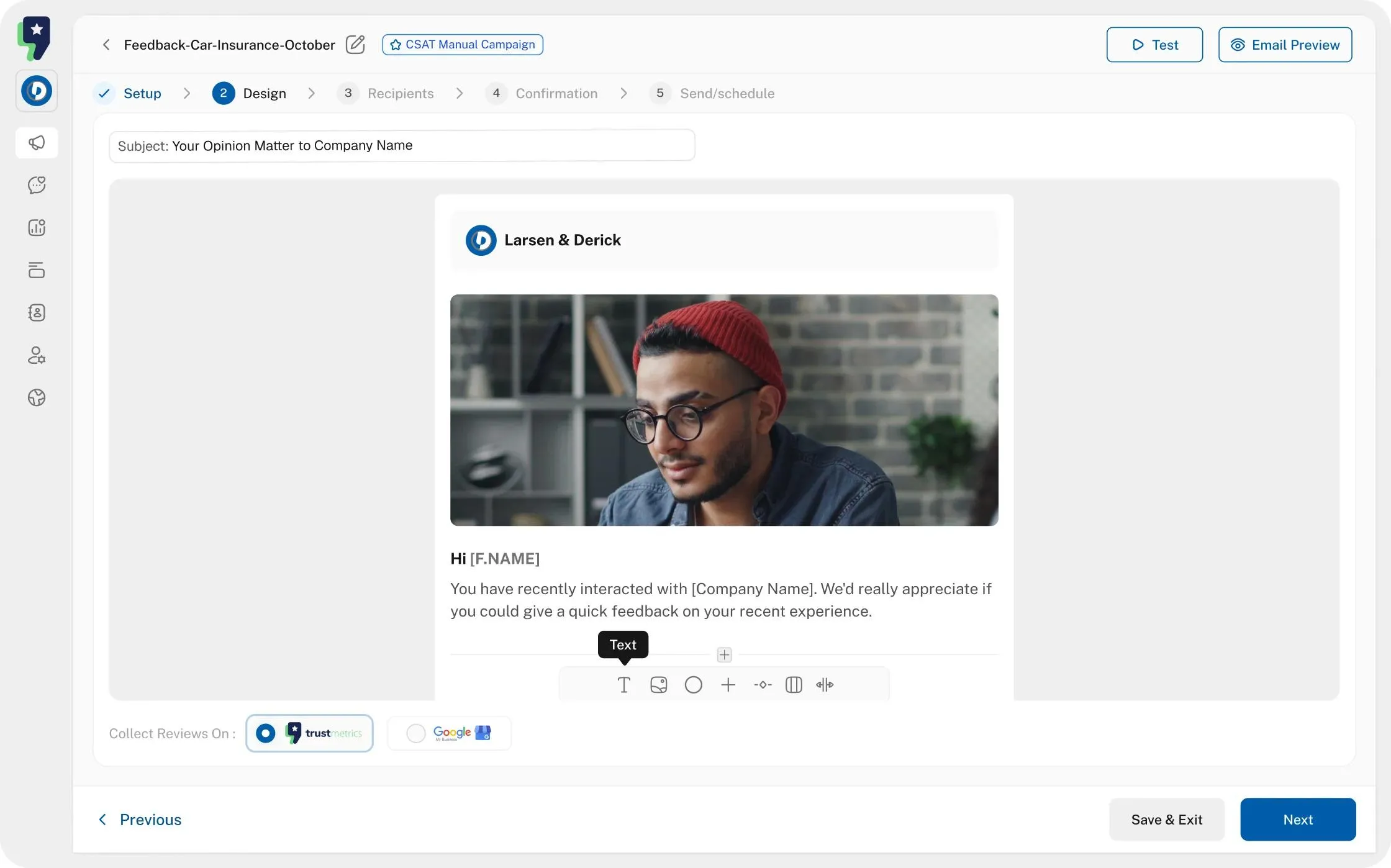
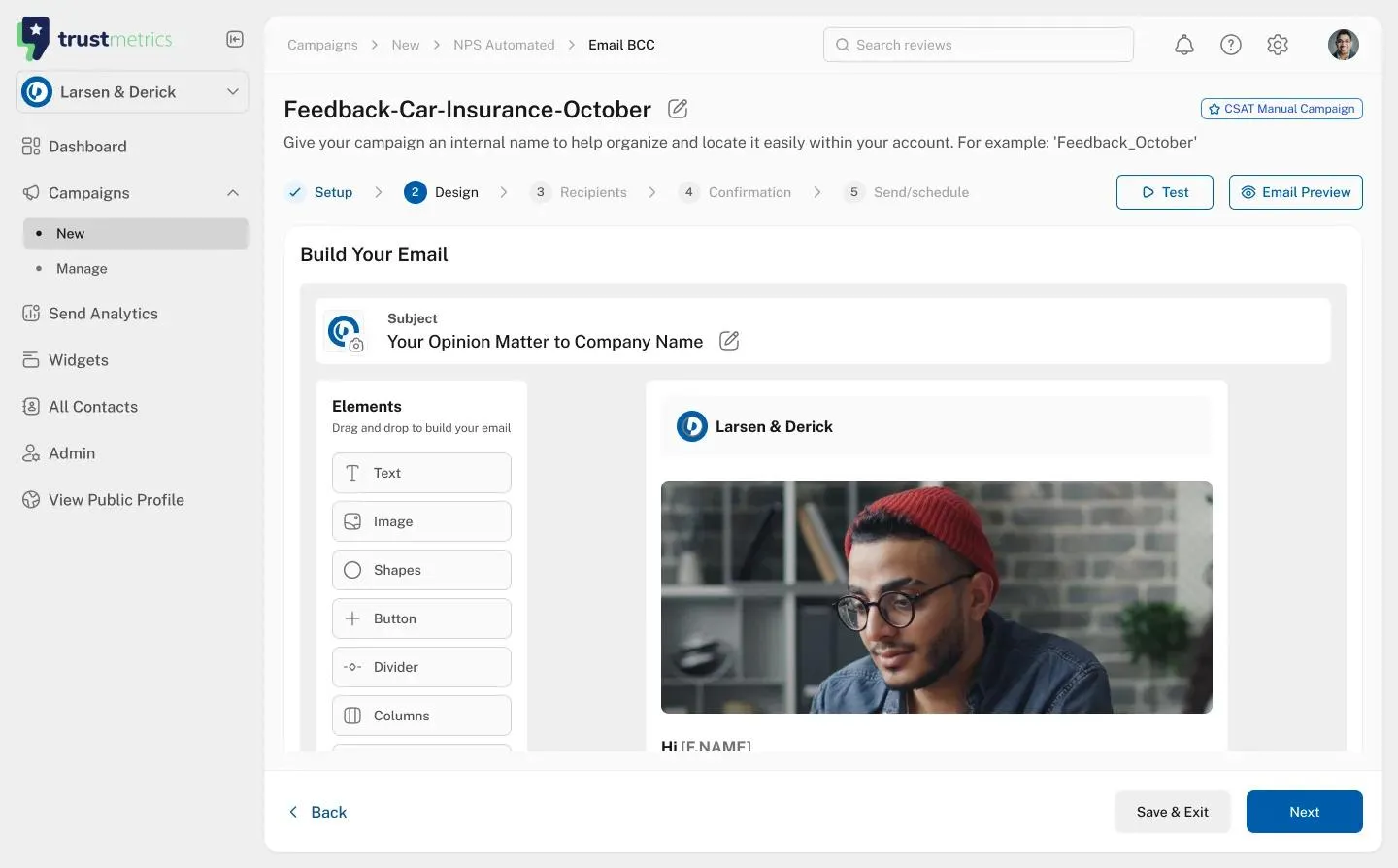
At a glance
Short on time? This is the problem and the result for each point, without using the slider. Problem and result for each point.
- 1
Easy to leave mid-task
Problem
Seven menu destinations stay open while building the email.
Final: Stays in flow
The menu collapses to an icon rail.
- 2
Noise, and setup repeated
Problem
Search, alerts, help and settings compete with the email.
Final: Attention stays on the email
The header keeps only back, name, type, Test and Preview.
- 3
Tools far from the work
Problem
Blocks live in a side palette, away from the email.
Final: Add content without looking away
A floating toolbar sits under the content.
- 4
"Back" was ambiguous
Problem
It could mean the previous step or leaving the builder.
Final: "Previous" says what it does
The breadcrumb is gone, so each control has one meaning and previous gives meaning that it is within the builder.
Based on design reasoning, not user test results yet.
Final Solution
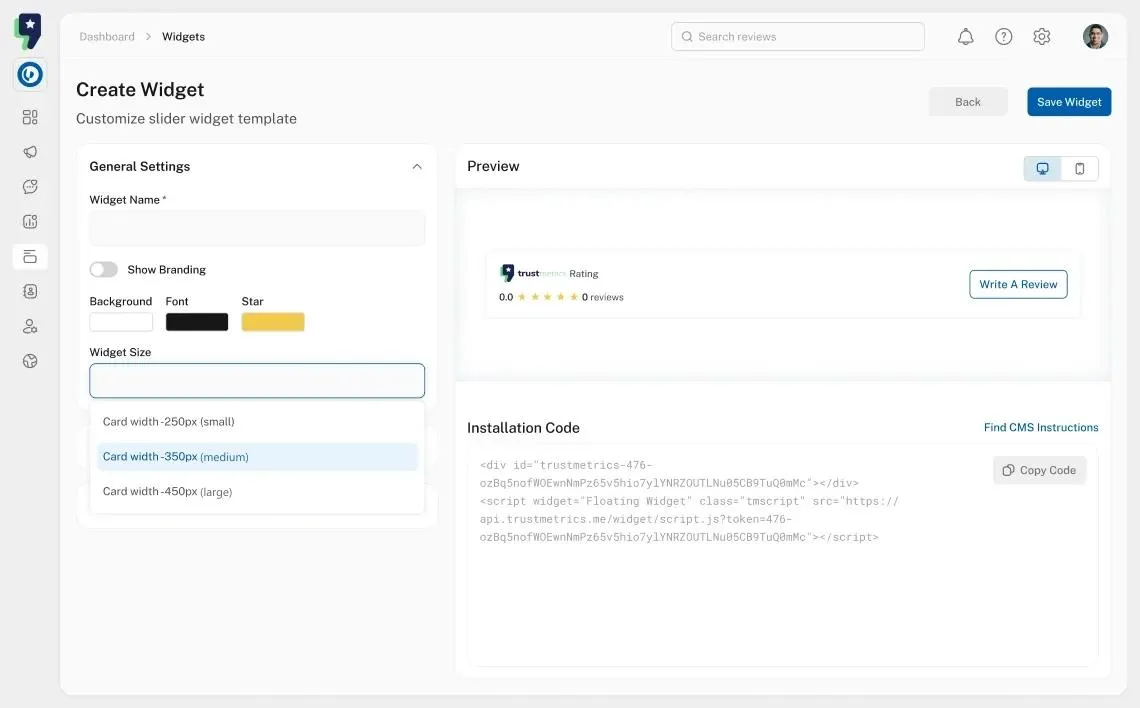
One platform to run feedback campaigns, read the results as a clear score, and publish ratings widgets.
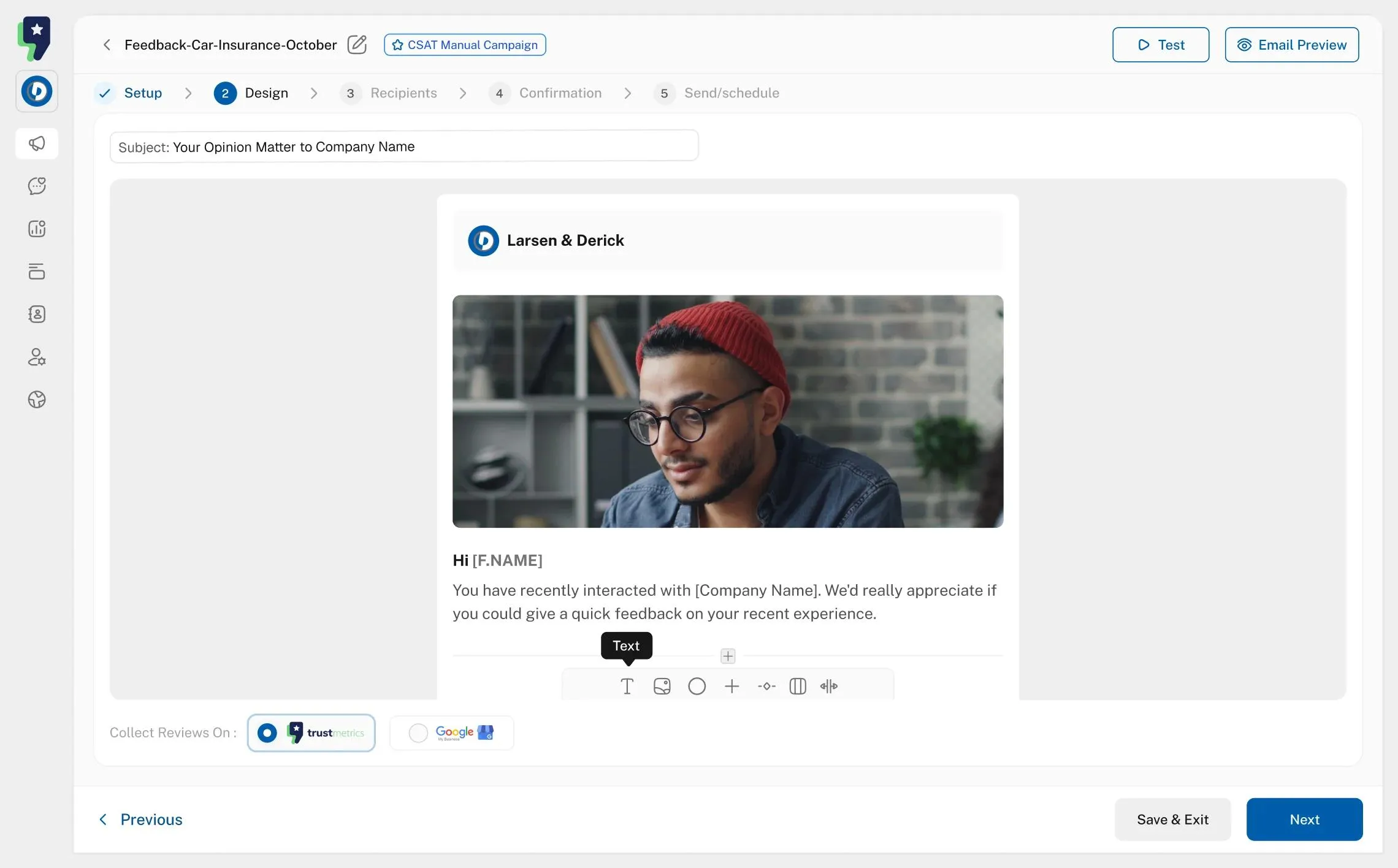
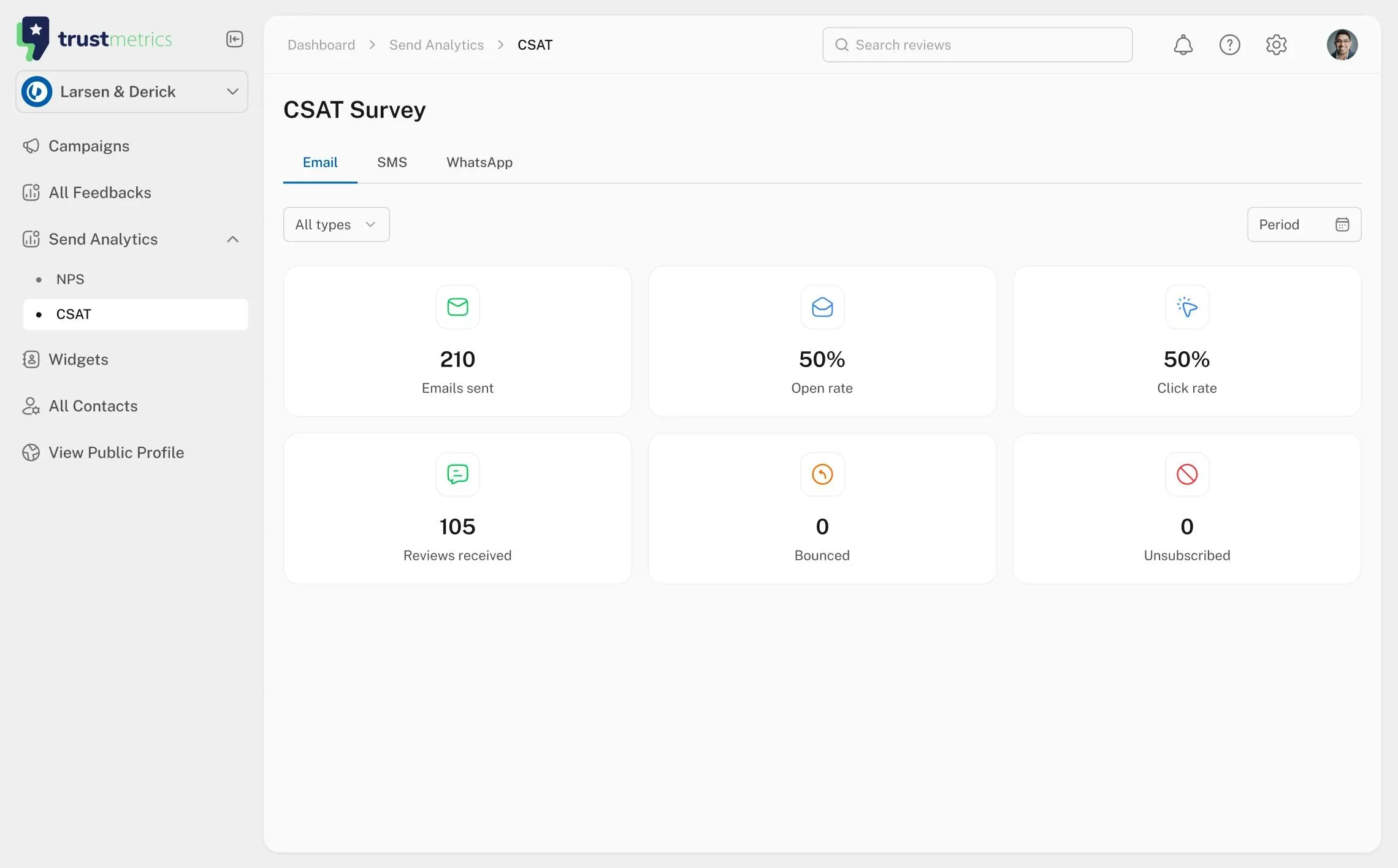
Campaign builder
Build, test and send a branded CSAT or NPS email in one focused screen, with the tools next to the content.
1 / 4
Outcomes & impact
What changed for users once the Final design was live.
- 1
Easy to navigate
Users found the platform easy to navigate and intuitive, even with dense reputation data.
- 2
Readable at a glance
Labelled scores, response counts and a focused layout let users read a credibility score at a glance and act on it with confidence.
- 3
Positive early engagement
Early engagement was positive, confirming the need for a reputation tool that is approachable and still powerful.
Early signals, not measured results yet.
Reflection
What I would change, what I took from it, and where I would take it next.
What I'd do differently
- 1
Agree on a baseline up front
Task completion, time to send a campaign and error rate. Without a baseline, I can describe what improved but can't show by how much.
- 2
Test the early flows with real users
Several V1 problems, like the ambiguous "Back" label and scores without context, were my own judgments. A short round of task-based testing would have confirmed them.
What I learned
- 3
A number alone does not build trust
I designed on the principle that a score needs its scale, its proportion and its sample size. Dense reputation data worked when I added context, not more visuals.
What I'd tackle next
- 4
Measure, then benchmark
Measure task completion and error rate on the campaign builder, and add benchmarks to the score so a manager can see how it compares, not just what it is.
- 5
Make multi-location support the next priority
Multi-location was a key problem that we moved to a later phase. More customers asked for it after release, so this pain is still there to fix.